The Studio Door: London’s Most Rewarding Winter Art Buys
The fair is over. The studio is open.
By the time the last Basel-bound plane leaves London, the art world’s attention has usually moved on. But for collectors who prefer conversation to crowds, the final weeks of the year offer something more valuable than another private view: the open studio. Across the capital, from Holborn to Hackney Wick, artists are sweeping floors, labelling works and unlocking doors to the places where the art is actually made.
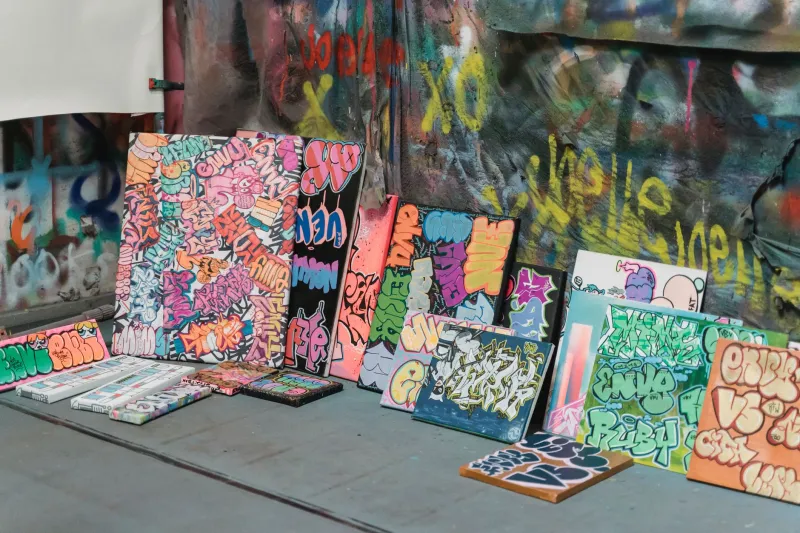
The open-studio model is the antithesis of the fair. There is no booth fee, no curator’s veto, no fluorescent lighting designed to flatter a gallerist’s bottom line. Instead, there is a working space, a table of recent experiments, and an artist who can explain precisely why a canvas was abandoned and another pursued. For UK collectors in 2026, this is not a consolation prize. It is the insider’s route.
Why the anti-fair model rewards serious looking
Fairs are efficient. They concentrate hundreds of galleries into a few days and allow collectors to compare across a global market. But that efficiency comes at a cost: prices are set to absorb stand fees, travel and hospitality, and the work on view is often the most commercially legible part of an artist’s output. Open studios invert that logic. Prices are generally lower because the overheads are lower. Riskier work is visible. And the transaction is direct, which means the buyer can ask about materials, edition sizes, framing and future availability without a gallerist mediating every exchange.
This does not mean open studios are naive or unprofessional. Many of London’s studio complexes are long-established, with waiting lists and rigorous selection processes. Cockpit Arts, for example, supports makers and artists across its Holborn and Deptford sites, and its winter open studios have become a fixture for collectors of craft-adjacent work. The atmosphere is collegiate rather than competitive, but the standards are high.
Where to look in November and December 2026
The capital’s open-studio calendar is deliberately decentralised, which is part of its charm. Dates vary, and visitors should check individual listings before travelling, but several clusters are reliably worth planning around.
Cockpit Arts, Holborn and Deptford
Cockpit’s winter open studios typically fall in early December. The Deptford site is particularly strong for ceramics, jewellery and textiles, while Holborn tends to offer a broader mix of fine art and design. Arrive early: the best small works disappear before lunch, and the studios become crowded by midday.
Hackney Wick and Fish Island
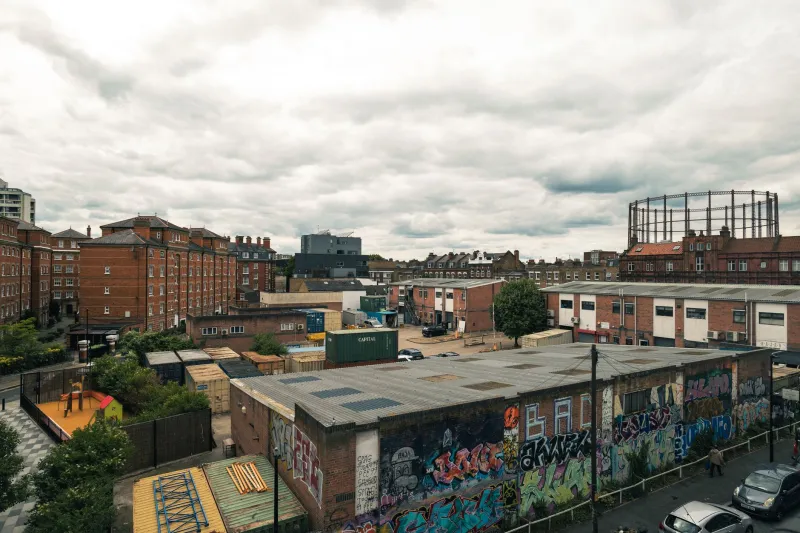
The studio clusters around Hackney Wick remain one of the most concentrated pockets of contemporary practice in London. Open weekends here are less formal than Cockpit’s, with a DIY energy that suits collectors who are comfortable talking to artists without a price list in sight. Look beyond the main drag: the smaller buildings on Fish Island often hold the most interesting painting and sculpture.
Wimbledon Art Studios
Wimbledon’s open studios are a south-west London institution, with hundreds of artists opening their doors over a long weekend in November. The range is wide, from figurative painting to printmaking, and the atmosphere is unpretentious. It is a good place for first-time buyers who want to see a lot without pressure.
The Chocolate Factory, Wood Green
This north London complex houses a diverse community of artists and makers. Its open events are less slick than the central fairs, but the work is often more adventurous. Ceramics and works on paper are particular strengths.
Bow Arts and Thames-Side Studios
Bow Arts’ east London sites and Thames-Side Studios in Woolwich offer a more industrial experience. These are working buildings, not galleries, and that is precisely the point. Visitors should wear sensible shoes and expect to climb stairs. The reward is access to large-scale painting and sculpture that rarely appears in central London fairs.
How to buy directly from an artist
The first rule of open-studio buying is to slow down. The absence of a gallerist does not mean the absence of due diligence. Ask about materials: is the canvas linen or cotton, the paint oil or acrylic, the print an edition or a monotype? Ask about framing: is it archival, and is UV glazing included? Ask about provenance: has the work been exhibited, and is it documented in the artist’s inventory?
Payment terms are often flexible. Many artists accept bank transfer and can provide a receipt; some offer instalment plans for larger works. UK buyers should confirm whether VAT is included in the quoted price and whether delivery is possible. For works that need crating, ask the artist for a recommendation rather than arranging it yourself.
It is also worth asking what the artist is working on next. A studio visit is a relationship, not a transaction. Collectors who buy well often return two or three times before committing. That patience is rewarded with better access and, occasionally, first refusal on a new series.
The case for looking beyond the fair
The open-studio model will never replace the international fair. It lacks the concentration, the comparison and the theatre. But it offers something the fairs cannot: a direct line to the conditions of production. For collectors who want to understand what they are buying, and for artists who want to sell without surrendering a percentage to a stand, that is a powerful combination.
As London’s fair calendar closes for 2026, the studio door remains open. The work is affordable, the conversation is unmediated, and the map is refreshingly spread across the city. For the insider, that is the season’s real opportunity.