Crates, Ledgers and Second Chances: The Afterlife of a London Fair Stand
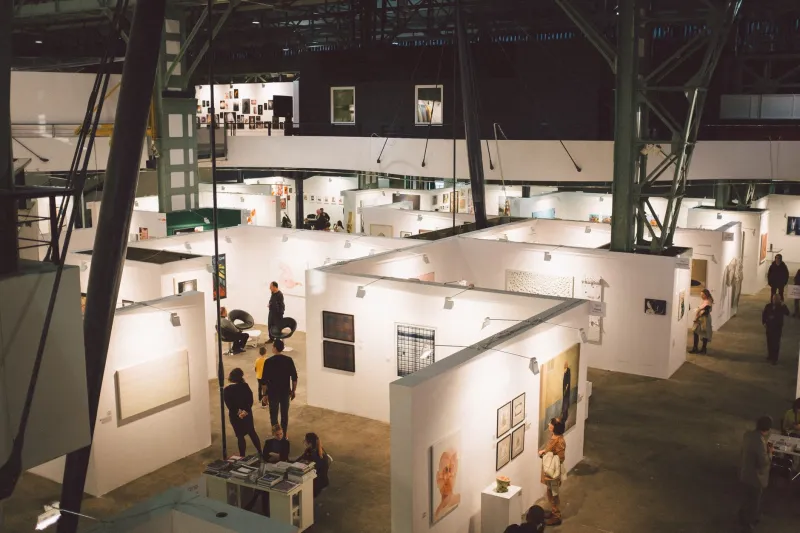
The final hour of a London art fair is often described as a test of nerves. Dealers watch the aisle, collectors circle back, and the floor staff begin the delicate work of reading a stand’s remaining inventory. Yet the most revealing part of the fair begins after the last visitor leaves. When the lights dim and the walls come down, every unsold work enters a second, less visible procedure — one that says as much about the fair ecology as the opening preview ever did.
After the Last Visitor
A fair stand is a temporary shopfront, but it is also a compressed stockroom. Works are chosen months in advance, shipped from studios and storage, hung according to an argument about taste, scale and price. When a piece remains unsold at close, the dealer is not simply left with an object. They are left with a decision about where it should go next, how it should be described, and whether it should be seen again in London within the same season.
The first stage is practical. Crates are recovered, condition checks are made, and the paperwork that accompanied the fair is reconciled with the gallery’s own records. For a collector, this may seem like backstage administration. For a dealer, it is the moment when a stand stops being a public statement and becomes a private ledger of what worked, what nearly worked, and what should not be repeated.
The Dealer’s Ledger
Unsold work is rarely a single category. Some pieces were never intended to sell at the fair; they were placed to anchor a presentation or introduce an artist to a new audience. Others came close, attracting interest that did not convert into a transaction. A third group may have been priced for a specific collector who did not appear. The dealer’s post-fair review separates these cases, because each calls for a different response.
This is where the fair’s apparent finality gives way to something more provisional. A painting that did not find a buyer in a Regent’s Park tent may be perfectly placed for a gallery’s winter programme, a regional art fair, or a private viewing arranged for two or three clients. The work has not failed. It has merely left one context for another.
Storage Is Not a Verdict
Storage has an unglamorous reputation, but in the London fair economy it functions as a holding pen rather than a graveyard. Galleries with permanent spaces can return works to the back room; smaller dealers may rely on specialist fine-art storage or consolidated shipping arrangements. The choice depends on scale, insurance and the artist’s own preferences.
For collectors, the important point is that storage is not evidence of neglect. A work may be held back because it is scheduled for a studio visit, because its frame is being changed, or because a dealer wants to show it alongside a different group of pieces. The fair is a high-visibility moment, not the whole life of an object. Understanding that can make a late enquiry more productive: the collector who asks where a piece will be shown next is often better received than the one who assumes the stand’s close is a clearance event.
The Studio Return
Some unsold works go back to the artist’s studio. This is especially common with younger artists, bespoke installations and pieces that were made for a particular presentation. The return is not a simple courier job. It involves condition reports, conversations about display, and sometimes a reassessment of whether the work should be offered again in the same form.
A studio return can also strengthen an artist’s position. Work that has been seen at a London fair has a public record, however modest. It may be photographed, discussed and remembered by curators or advisors who did not buy at the time. When it reappears in a studio or a later gallery presentation, it carries that history with it. In this sense, the unsold work is not invisible; it is between chapters.
The Second-Chance Circuit
London’s fair ecology includes a range of second-chance networks. Gallery back rooms, private dealer lists, online viewing rooms and smaller fairs all provide routes for work that did not sell first time. Some of these channels are formal; others operate through the quiet conversations that follow any fair week. An advisor may mention a piece to a client who missed the preview. A dealer may include it in a themed presentation months later. A collector may see it again at a studio and wonder why it passed unnoticed.
This circuit is not unique to London, but the city’s density makes it unusually efficient. A work can move from a Mayfair storage facility to a Bermondsey project space, from a Fitzrovia gallery to a collector’s home in a matter of weeks. The fair may be over, but the work is still circulating within a relatively small professional world.
Reading the Late Opportunity
For collectors, the afterlife of unsold work offers a considered opportunity rather than a bargain hunt. A piece that remains available after a fair may be open to discussion, but it is not necessarily reduced. The dealer has already invested in the presentation and may prefer to hold the price and wait for the right context. The useful question is not “what discount is available?” but “what happens next?”
A late buyer should ask about provenance, condition, display history and future plans. They should also be clear about their own timeline. If a work is due to return to the studio or appear in another fair, the collector may need to move quickly or accept that it will be shown again. The conversation is best conducted with the same formality as any other acquisition, not as an afterthought to the fair.
A Slower Ecology
The fair’s vanishing act is therefore less mysterious than it first appears. Unsold art is moved, stored, re-described and shown again. It passes through ledgers, crates and quiet rooms. For London’s dealers, this is simply the rhythm of the year. For collectors, it is a reminder that the fair is a beginning and an ending at once — a place where work is tested in public, then returned to a slower ecology of patience, judgment and second chances.