The Second Circuit: How Memory Filters a London Fair
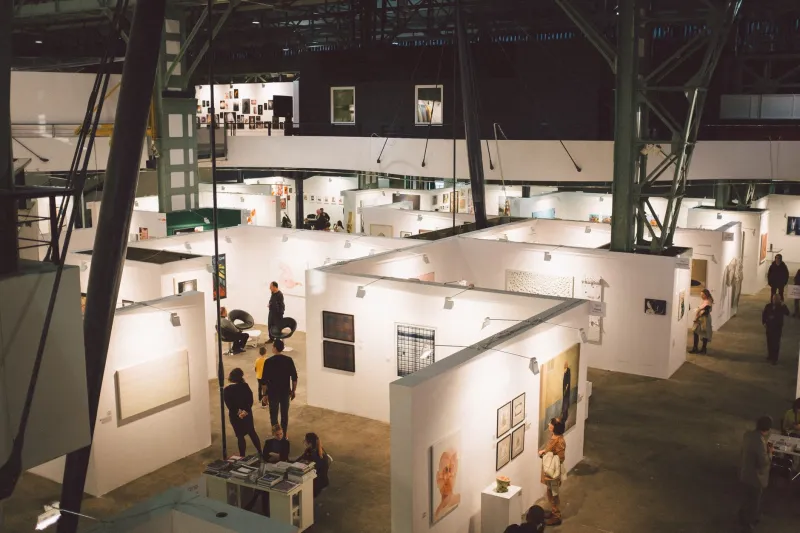
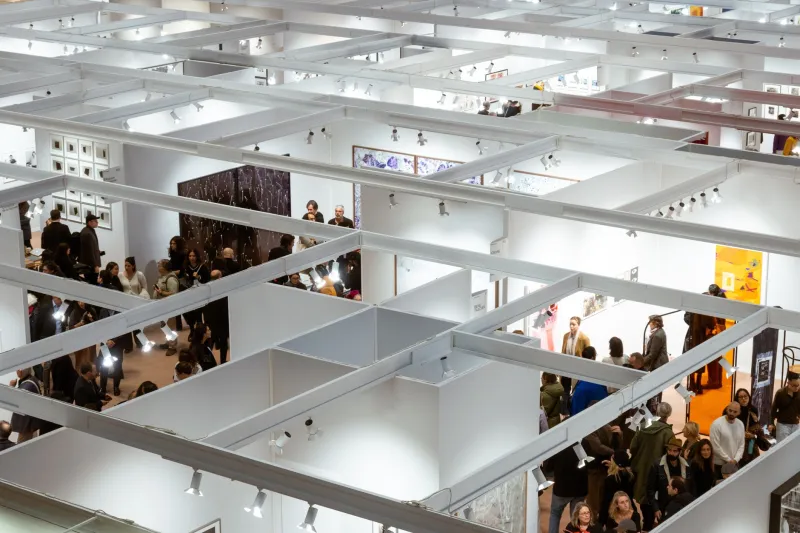
The first circuit of a London art fair is rarely a decision-making exercise. It is an act of orientation: a measured pass through booths, aisles and crowded sightlines, during which the eye is asked to absorb far more than it can meaningfully assess. The second circuit is different. It is where the fair begins to sort itself, and where the collector’s memory becomes a more reliable guide than the immediate charge of discovery.
The First Lap Is Not the Decision
A common error among collectors, particularly those new to fair week, is to treat the first encounter as conclusive. A work catches the eye; the price is noted; a conversation begins; a decision is forced. Yet the first lap is compromised by novelty and fatigue in equal measure. The lighting, the hang, the adjacent booth and the pressure of a busy aisle all exert an influence that has little to do with the work itself.
The wiser approach is to walk the first lap with what might be called light attention. Note only what is exceptional, and note it briefly. Resist the urge to interrogate every stand. Keep a steady pace, avoid the gravitational pull of the most crowded booth and allow the fair to present its range before narrowing it. The first lap is not a shortlist; it is a preliminary reading.
The Interval Does the Work
Between the first and second circuit, an interval is essential. A coffee, a bench, a few minutes outside the hall: anything that removes the work from the visual noise of the fair. What survives that interval is useful information. The pieces that return unbidden — the ones that surface while you are reading a label or waiting for a taxi — are often the ones that merit a second look.
This is not a matter of mystique. Memory filters for substance. A work that depends on theatrical scale or an aggressive hang may impress in the moment and fade quickly. A work that holds its place in the mind after the booth has been left behind is telling you something about its internal logic. The second lap is an opportunity to test that signal against the object itself.
Structuring the Return
A deliberate second circuit should be shorter and more targeted than the first. Rather than repeating the whole fair, return to perhaps five or six stands. A useful method is to divide the first lap’s notes into three categories: return, release and review. The first is self-explanatory. The second is a discipline: works that were arresting but did not survive the interval can be set aside without regret. The third is for pieces that remain uncertain, and these are often the most interesting.
On the return, approach each stand with a specific question. Is the surface as convincing at close range as it was from the aisle? Does the work hold its own when seen beside other pieces by the same artist? Has the price been quoted consistently? The second lap is not a re-run; it is a cross-examination conducted in a quieter register.
It also helps to reverse the route. Approaching a stand from a different direction, or seeing it later in the day when the crowd has shifted, can reveal weaknesses or strengths that the first pass concealed. In London fairs, where booths are often tightly planned and sightlines are carefully managed, this small change of perspective is worthwhile.
When a Second Look Becomes a Conversation
The threshold for speaking to a dealer should be higher on the second lap than on the first. If a work has survived the interval and continues to hold attention at close range, a conversation is justified. The questions should be practical: condition, edition, provenance, frame, delivery, and whether the gallery has other works by the artist available for viewing. These are not mere formalities. They are the means by which enthusiasm is converted into judgement.
There is, however, a counter-discipline. Some works should remain notes rather than conversations. If the doubt concerns scale, domestic context or the coherence of the artist’s wider practice, a second look may be enough. Forcing a conversation in order to resolve an uncertainty can lead to a purchase made on the dealer’s terms rather than the collector’s. The second lap should clarify; it should not pressure.
Nerve, Fatigue and the Quiet Test
By the second circuit, fatigue is a real factor. Attention narrows, patience shortens and the temptation to settle increases. It is worth setting a time limit — forty-five minutes is often enough — and leaving before the fair’s atmosphere begins to substitute for your own judgement. Momentum matters, but so does the discipline to stop.
The quiet test at the end of the second lap is simple: which work would you regret leaving behind? That question is not sentimental. It is a way of distinguishing between a piece that has genuinely lodged itself in your thinking and one that merely appeals to the appetite of the day. In London’s crowded fair calendar, where the next preview is always close at hand, the second lap is the collector’s best protection against the merely immediate.
The return ticket, in other words, is not a repetition. It is the point at which looking becomes choosing.