Closing Time, Considered: Buying Well on the Final Day of a London Art Fair
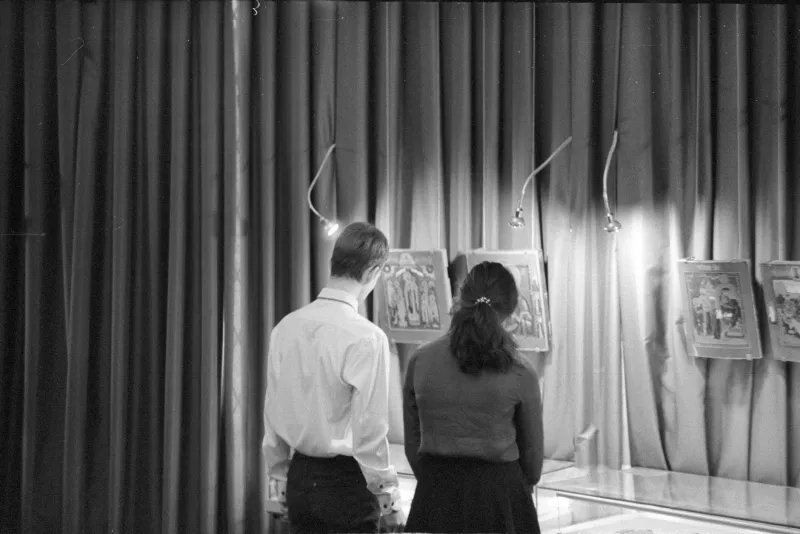
The final day of a London art fair has its own weather. By Sunday afternoon the aisles have thinned, the coffee queues have shortened and the stands begin to show the small signs of a week’s work: empty plinths, rearranged hangings, a dealer’s jacket over the back of a chair. It is tempting to read this as the moment when prices soften and conversations become unusually flexible. In practice, the closing hours reward a different kind of buyer — one who has done the work earlier and arrives not to hunt for a reduction but to resolve a decision.
The myth of the clearance rail
There is a persistent belief among first-time fairgoers that the last day exists to be bargained through. The image is of unsold works being hurried out at a discount, much like a retail sale rail. London’s serious fairs do not quite work that way. Dealers plan their stock carefully, and a work that has not sold by Sunday is not automatically a distressed asset. It may be held for a future presentation, reserved for a collector abroad, or simply too central to the gallery’s programme to be treated as end-of-week inventory.
That is not to say the final day is without opportunity. It is, however, an opportunity of a particular kind. Dealers may be more open to discussing terms when a sale can be completed cleanly before the close, and they may be more willing to introduce a buyer to another work that has been kept off the main display. But the difference between a considered conversation and a clearance request is obvious to anyone who has spent the week on a stand. The former is welcome; the latter tends to close doors.
Where attention actually goes
By Sunday, dealer attention is a finite resource. The first days are shaped by previews, institutional visitors and the steady rhythm of collectors moving through the fair with appointments in hand. The final day is shaped by logistics. There are crates to confirm, condition reports to send, invoices to settle and a van to load. A dealer who seems distracted at noon may not be indifferent; they may be calculating how many hours remain before the stand is dismantled.
For the collector, this changes the nature of a useful visit. The morning is generally better for unhurried looking, when the stand is quieter and the staff have not yet entered the final push. Early afternoon can be good for a second viewing of a work that has stayed in mind. Late afternoon is best for practical questions: payment, collection, framing, transport and the paperwork that should never be left to a hurried email on Monday. The closing hour is not the time to begin a negotiation from first principles. It is the time to conclude one that has already been properly begun.
Deadlines, shipping and the practical hour
Shipping deadlines are the quiet engine of the final day. A London fair may close on a Sunday evening, but the business of moving art does not. International buyers need export paperwork, UK buyers need delivery slots, and galleries need to know which works are leaving with whom. A purchase agreed at four o’clock can still be a good purchase, but only if the practicalities are understood before the handshake. Ask when the work can be collected, who arranges the courier, whether the frame is included and what insurance applies between the stand and the buyer’s wall.
This is also the moment when stand fatigue can be mistaken for flexibility. A dealer who has been on their feet for five days may agree to terms they would not have considered on Wednesday, but they may also make errors of memory or judgement. The collector’s protection is simple: write down what has been agreed, confirm the invoice details and avoid relying on a verbal arrangement made in the final hour. Good dealers respect a buyer who is clear rather than casual.
A considered etiquette for the closing hours
The etiquette of Sunday is not complicated, but it is specific. Begin with a greeting rather than a price. If a work has been on your mind since the preview, say so plainly and ask whether it remains available. If you are considering a lower figure, frame it as a genuine offer rather than a speculation. Dealers can tell the difference between a collector who has thought carefully about a work and one who has mistaken the fair for a market stall.
It is equally important to respect the stand’s remaining time. If a dealer is with another buyer, wait. If a work is already reserved, do not press the point. If you decide not to proceed, say so promptly; a clear no is more useful than a lingering maybe. These small courtesies matter because the London art world is small, and the final day is remembered. A buyer who behaves well in the closing hours is more likely to be welcomed back in the next fair week.
The patient buyer’s advantage
The Sunday effect, properly understood, is not about waiting for prices to fall. It is about waiting for clarity. By the final day, a collector has had time to see the work in different light, to compare it with others, to check the condition and to understand how it might live at home. The patient buyer is not the one who arrives last in the hope of a bargain; it is the one who has used the week to become certain.
In 2026, London’s fairs will continue to reward that certainty. The closing hours can be productive, even pleasurable, but they are not a separate market with separate rules. They are the end of a conversation that should have begun earlier. Approached with preparation and good manners, Sunday is less a scramble than a settlement — and that is precisely why it can be the most rewarding day of all.