A Deliberate Winter: Holding the Right Dates in London’s Art Diary
By 8 November 2026, the winter diary is already beginning to fill. Preview notices arrive before the Christmas cards, talk programmes are circulated to patron circles, and gallerists begin asking which artists a collector might like to see in the studio before the new year. The temptation is to accept everything. The better discipline is to accept very little, and to choose it well.
This is a collector’s calendar for late November 2026 through February 2027. It is not a social schedule. It is a plan for looking closely, asking better questions and arriving at the fair week with a settled eye rather than a scattered one.
Late November: choose two previews, not six
Preview season rewards reconnaissance. It does not reward attendance for its own sake. Between now and the end of November, select no more than two previews that genuinely allow you to see work before the rooms become crowded. One should be at a gallery whose programme you already follow; the other should introduce an artist or discipline you are curious about but have not yet tested.
RSVP windows matter. Patron previews and collector receptions often close before the public programme is announced, and a polite enquiry now is more useful than a late request in January. Ask the gallery whether the preview includes a focused walkthrough, and whether the artist will be present. If the answer is no to both, consider whether the preview will tell you more than a quiet weekday visit later in the month.
This is also the moment to book studio visits for January and February. Studios are not showrooms. A visit should have a reason: a new body of work, a shift in scale, a conversation about process that cannot happen in a fair aisle. Two well-chosen visits will do more for a collection than a dozen crowded drinks receptions.
Early December: one talk that changes your looking
Talk programmes are often published before the holiday pause. Choose one or two that address the mechanics of looking rather than the theatre of the season: provenance, pricing, conservation, the relationship between craft and collecting. A good talk should give you a criterion you did not have before.
Do not attend a panel simply because it is convenient. If the subject is broad, ask whether the discussion will be specific enough to be useful. If the speakers are unfamiliar, read around them first. The aim is not to be seen at the talk; it is to leave with a sharper question for the fair.
The holiday pause: read, budget, and leave the diary alone
December’s quieter weeks are for reading, not RSVPing. Review the notes you made in November. Set a budget range for the winter, including framing, shipping and any conservation advice. If you are considering a major purchase, begin the conversation about condition reports and payment terms now, while galleries have time for a considered reply.
When exhibitor lists are published, read them properly. Mark the stands you want to see, but also mark the ones you are likely to skip. A fair is not a completion test. Two half-days with a clear route will usually produce better looking than four days of drifting.
January: fair week, with white space
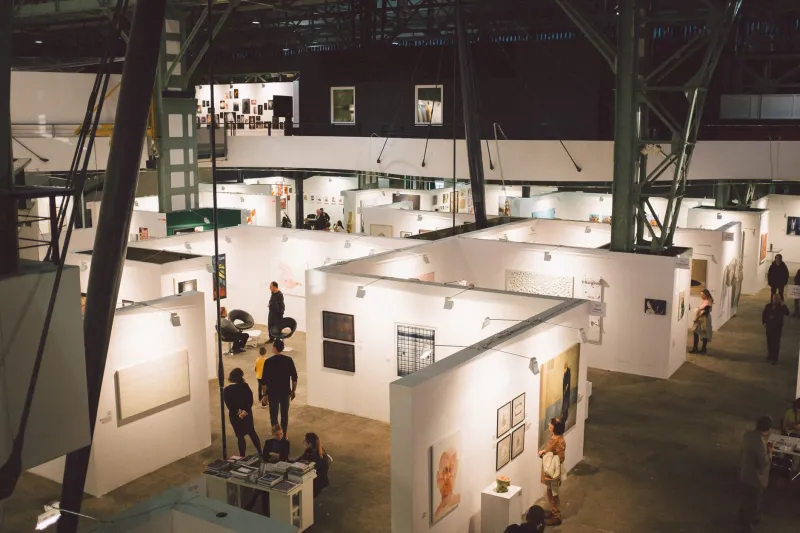
When the London Art Fair returns to the Business Design Centre in January, resist the instinct to fill every hour. Plan one preview or early-entry session if you have access, one focused half-day for the main fair, and one collector lunch that allows a proper conversation. Leave the afternoons after a fair visit deliberately empty. That is when notes become judgments, and judgments become decisions.
Book any restaurant table before the fair week begins. Fair-week lunches are not the moment for improvisation. If you are attending evening receptions, choose two rather than five, and protect the following morning for a return visit to a stand you liked but did not fully understand.
Late January to February: the quieter commitments
The weeks after the main fair are often the most rewarding. This is when studio visits happen, when galleries can give you an hour rather than ten minutes, and when the February craft and design fair at Somerset House offers a different pace of looking. Choose one studio visit over three receptions. Choose one collector group conversation over a general preview.
Confirm RSVPs early, but do not confuse confirmation with commitment. If a visit no longer serves the collection, decline politely and keep the time for looking. By the end of February, the test is simple: can you name three works you saw closely, two artists you want to follow, and one question you still need answered? If so, the winter diary has done its work.
The standard to hold
A good winter calendar is not the fullest one. It is the one that leaves room for a second look, a slower conversation and a decision made without the pressure of a crowd. Selectivity is not a lack of curiosity. In London’s fair season, it is the condition that makes curiosity useful.