The Booth’s Paper Mirror: Reading Taste and Price in Fair Ephemera
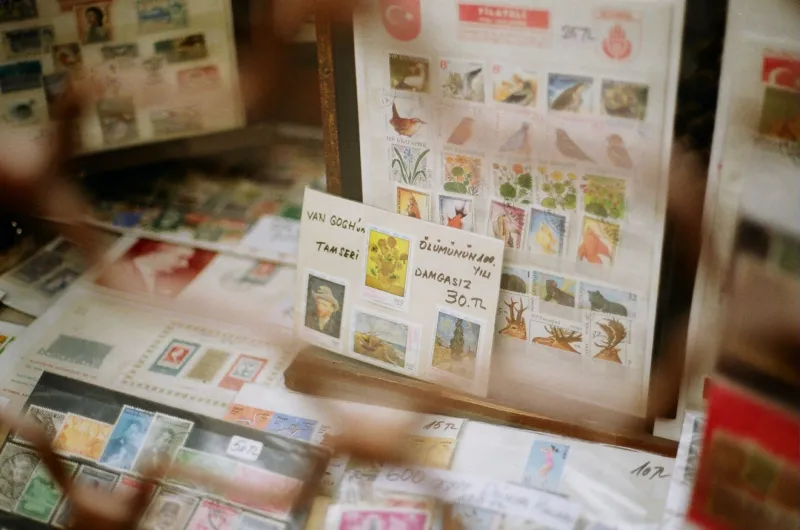
By November 2026, the main run of London’s art fairs has passed and the acquisitive dust has settled. Collectors will remember individual works, perhaps a conversation across a stand, but the paper often survives longer than the impression. The invitation card, the fair catalogue, the checklist, the price sheet and the modest booth handout are not merely administrative residue. They are a form of intelligence, and one that is frequently overlooked.
At a London fair, the printed matter around a stand operates as a gallery’s first argument. It is prepared in advance, edited with care and intended to frame the encounter. Reading it closely is not a substitute for looking at the art. It is, however, a useful discipline: a way of testing taste, price architecture and professional judgement before the first question is asked.
The invitation sets the register
Private-view cards and preview invitations arrive weeks before the fair. They are often kept as souvenirs, but they deserve a second look. The choice of image is rarely accidental. A gallery may lead with a new work by a represented artist, a historical piece that anchors the stand, or a detail that rewards close attention. The paper stock, typography and format all communicate something about the gallery’s self-image: restrained or demonstrative, scholarly or commercial, international or deliberately local.
A card that reproduces the same image as the catalogue cover is not necessarily unimaginative. It can signal a coherent presentation. A card that arrives with a handwritten line from a director, or with a carefully chosen excerpt from a text, suggests a relationship worth noting. In London, where the fair calendar is crowded and private views compete for attention, such details help distinguish a gallery that is thinking about its audience from one that is simply announcing its presence.
Catalogues are arguments, not souvenirs
The fair catalogue and the gallery’s own publications repay slow reading. Look at the essays, the checklist and the production values. A substantial catalogue with a commissioned text and a proper exhibition history is an investment by the gallery in its artists. A thin brochure may be perfectly adequate, but it tells a different story. Read the artist biography for gaps as well as achievements: which collections, which exhibitions, which critics. The omissions can be as informative as the claims.
At the stand, compare the catalogue entry with the work in front of you. Does the text address the object directly, or does it drift into generality? Is the checklist complete? Are dimensions, medium, edition size and date stated clearly? A catalogue that is precise about such matters is easier to trust when it comes to more complicated questions of provenance and condition. Precision is a habit, and it tends to show across a gallery’s printed output.
The price list has an architecture
Price lists are sometimes treated as confidential documents, sometimes handed over freely. Either way, their format is revealing. A single printed sheet with clear titles, dimensions and prices suggests a gallery comfortable with transparency. A discreet folder, a tablet or a verbal range may signal a different commercial approach. Neither is inherently better, but the collector should notice the difference.
Read the terms as well as the figures. Is VAT included? Is framing, crating or delivery additional? Are edition sizes stated, and are artist proofs accounted for? For UK buyers, the distinction between the displayed price and the final cost is not a minor detail. A list that answers these questions before they are asked is a mark of professionalism.
The internal hierarchy of a price list is also worth studying. The relative values placed on different artists and different works reveal how a gallery positions its programme. A modest works-on-paper section at the back may contain the most interesting entry. A single high price may be less about the market than about a work the gallery does not especially wish to sell. Price architecture is rarely arbitrary, and it is often more legible on paper than in conversation.
Handouts and booth notes
Booth handouts are the most disposable-looking documents and sometimes the most useful. An artist statement, a reproduction with technical details, a note on editions or a care instruction sheet can indicate how carefully a gallery looks after its artists and its buyers. A handout that is badly printed is not necessarily a warning, but a handout that is accurate, dated and specific is a small sign of good practice.
Collect them without embarrassment. A fair is a difficult environment for memory, and the paper trail is a more reliable record than recollection. Note the stand number, the date and the name of the person who spoke to you. If a work interests you, write down the catalogue number and the exact title. These annotations take seconds and will be valuable later, particularly if a purchase follows or if an edition needs to be traced.
A practical reading protocol
First, gather the paper before forming a view. Pick up the invitation, the catalogue, the price list and the handout. Second, annotate them with date, stand and any conversation. Third, read the checklist against the display: what is included, what is absent, what is given prominence. Fourth, check the price list for terms, editions and VAT. Fifth, note condition and provenance claims, and compare them with the catalogue text. Sixth, ask one precise question rather than several vague ones. Seventh, file the material at home, either physically or as a scan, alongside the receipt and any certificate.
None of this replaces the essential act of looking. Ephemera cannot tell you whether a painting is good, and it should not be allowed to substitute for judgement. But it can tell you how a gallery thinks, how it prices, how it presents its artists and how it treats its buyers. In a fair week crowded with claims, the printed sheet is often the quietest and most candid witness. Read it before you speak, and you will arrive at the conversation better prepared.