The Price, the Provenance, the Exit: Fair Conversations Done Well
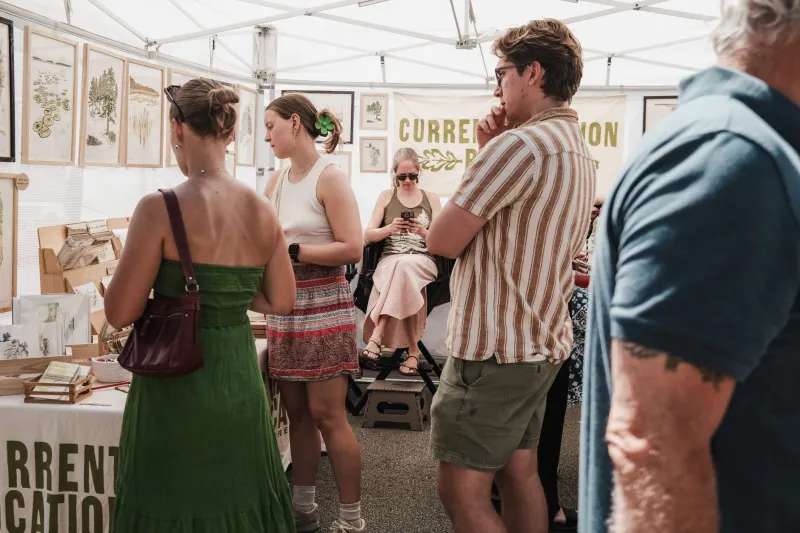
There is a particular kind of visitor who circles a booth without ever quite arriving. They hover at the edge of the carpet, glance at the price list, retreat, return, and leave without asking a question. The gallerist, meanwhile, is caught between attentiveness and restraint. It is an awkward ballet, and it is entirely unnecessary. The booth conversation is not a hurdle before collecting. It is part of the experience, and it can be conducted well.
London’s fairs are full of knowledgeable gallerists who expect questions. The useful ones are direct, specific and politely bounded. The following is not a script to be recited. It is a set of habits for collectors who would rather ask than hover.
Begin with the work, not the weather
Open with the object in front of you. “I have been looking at this painting for a few minutes—could you tell me how it was made?” is a better beginning than a general remark about the fair being busy. It signals attention and gives the gallerist something concrete to answer. If you already know the artist’s name, say so. If you do not, ask. There is no shame in being new to a practice, only in pretending otherwise.
A good opening question is open but not vague: “What would you want a collector to understand about this body of work?” It invites context without demanding a sales pitch.
Asking the price without flinching
Price is not an indelicate subject; it is a practical one. Ask clearly: “May I ask the price of this work?” Then listen. If the figure is higher than you expected, do not fill the silence with apologies. A simple “Thank you, that is helpful” is sufficient. If the work is sold, ask whether there is another available from the edition or a related work. If the price is on application, ask why: it may be because the artist’s market is managed privately, or because the work is still being priced. A gallerist should be able to explain the convention without evasion.
In the UK, it is reasonable to ask whether the price includes VAT and whether there are any additional costs such as framing, crating or delivery. “Is that inclusive of VAT?” is not a hostile question. It is the question of a collector who intends to proceed properly.
Editions, condition and the small print
For editions, ask the questions that determine what you are actually buying: the edition size, the number of the work on offer, whether artist’s proofs exist, and whether the edition is complete. “Could you confirm the edition size and which number this is?” is straightforward and expected. For works on paper, ask about condition, hinges, foxing and framing. For paintings, ask about support, varnish and any recent conservation. A condition report should be available for older or fragile works.
Provenance matters, but it need not be a interrogation. “Could you tell me a little about the work’s history?” will usually produce the useful facts: previous owners, exhibition history, publication. If the answer is thin, note it. Thin answers are not automatically suspicious, but they are worth following up in writing.
Commissions and delivery
If you are discussing a commission, ask about timeline, deposit, approval points and fabrication. Who signs off the final work? What happens if it differs from the maquette? For delivery, ask whether shipping is included, who arranges insurance, and whether the gallery can recommend an installer. In London, practical questions about stairs, lifts and storage are not vulgar. They are the difference between a purchase that works and one that becomes a problem.
Ask for the key terms in writing before any deposit is paid. A good gallery will expect this. A good collector will read it.
Reading the room and the graceful exit
Warning signs are usually behavioural rather than factual: evasiveness about basic documentation, pressure to decide immediately, or a refusal to put terms in an email. You are not obliged to continue a conversation that feels coercive. A graceful exit is simple: “Thank you—I would like to think about it. May I take a card and follow up?” If you are not interested, say so without elaborating. “I have enjoyed looking, but it is not for me” is a complete sentence.
Do not hover as a substitute for deciding. Do not promise to be in touch if you have no intention of doing so. The fair is small enough that manners travel.
The follow-up is part of the conversation
After the fair, write within a few days. Refer to the work and the conversation, ask for the images or documents you discussed, and confirm any figures. Keep a simple record of what you saw and what you decided. The booth conversation ends when the fair closes; the collecting relationship does not. Conducted well, it is one of the quieter pleasures of London’s art calendar.